Climate Change: why are we still debating its existence?

By Anonymous

How may climate change transform our lives you ask? rising sea levels, increased greenhouse gas emissions and extreme heat waves across the world have been on the rise in recent years (Oreskes,2005). These statements may not mean much to you, but environmental scholars have connected the direct links between human utilization of fossil fuels such as oil and coal and the release of enormous amounts of heat trapping carbon dioxide into the air and its continual interaction with the natural environment in not so positive ways. Although many may disagree, science and common sense suggest climate change is real and will affect humans in ways which will transform the lives of future generations to come if we don’t act quickly. In NASA’s “vital signs of the planet series”, the effects of climate change are listed for those who dare to care.  

What may climate change do you ask? well, according to a New York Times article published in 2017, the current rate in which heat is accumulating on the earth due to human emissions and deforestation of carbon holding plantation is roughly equal to the heat which would be released if 400,000 atomic bombs were detonated. Experts estimate by the year 2040 things will begin to deescalate and the irreversible ramifications of climate change will begin to take a firm hold. Think about it? What would all that Carbon dioxide do to our weather conditions, agricultural yields and daily human life. It is reported the animal kingdom will suffer the most casualties during this period. Their direct dependence on the natural earth means they stand right in the shooting line of this beast called climate change. In this New York Times article big questions pertaining to climate change are addressed using short answers.

400,000 atomic bombs, that’s insane!!, however many people are still in denial about climate change including world leaders. Skepticism has increased and heads of states such as Donald Trump are openly fighting the facts about climate change and how it is affecting the planet. His views on the subject have remained consistent over the years and he isn’t shy from expressing them. Even before his presidency, tweets about his non-agreeance to globally agreed on facts, about the changing climate of the world were becoming more frequent. For example, in October 2015, he tweeted “Boy its cold outside, wouldn’t be bad to have a little of that good old Global Warming right now!” (Trump, Donald. Twitter post. October 2015, 1.30AM ) after responding to a question about climate change and the cold weather America was having. Check out the link to read more tweets. (Insert link)   

As it may be, skeptics of climate change are increasing and spreading their views about the topic. You ask why this may be? Psychologists Gorman & Gorman 2019, put forward a few reasons why some people choose to deny climate change. Gorman & Gorman 2019, suggest one reason for denying climate change might be motivated interference or having a bias to dismiss certain evidences that may contradict your way of life. For example, people whose daily bread is dependent on the oil industry may be inclined to favor rhetoric against climate change as it supports the continuation of their livelihood. Another reason why so many people dismiss climate change is the size of its implications. If true, climate change will force many people to come to terms with the truth which will mean deep self-reflection and the acknowledgment of immediate change. Eating less meat and removing cars from daily human life as well as expelling the airplanes used for tourism to lessen the carbon dioxide emissions made by humans maybe hard for some people to adopt. Climate change experts have also long understood the economic benefits invested in the fossil fuel industry. Industries such as ExxonMobil, Chevron, BP and other giant petroleum companies spend millions on propaganda to mislead the public’s perception on climate change and the decline of the earth. They work tirelessly to influence politics at the top level and invest heavily in projects which advance their interests (Gorman & Gorman, 2019).

According to Greenpeace, 2019 the oil and gas companies in America spent 142 million dollars on lobbying the US government on climate change in 2014. Oil and gas still remain the number one contributor to climate change this century. It is important world nations band together and confront this unforgiving beast as it destroys indiscriminately. Future generations will then have access to a world which appreciates balance and avoids waste. Which in turn will pave the way to the enhancement and development of humanity (Greenpeace, 2019).  

References:

Gorman, S & Gorman J.M. (2019, January 12). Climate Change Denial. Facing a reality too big to believe [Blog post]. Retrieved from https://www.pschologytoday.com/intl/blog/denying-the-grave/2019/climate-chnage-denial

Greenpeace. (2019). Oil. Retrieved from https://www.greenpeace.org/usa/global-warming/issues/oil

Oreskes, N. (2005). The scientific consensus on Climate change. Science, 306(5702), 1686.

Why are social workers so tough on themselves?

By Jane Smith

In this blog post, I’d like to tackle some of the challenges that social workers face in their profession, namely their perception of themselves and why this might be the case. Social workers don’t believe the public has a particularly great opinion of social workers (Staniforth, Deane & Beddoe, 2016). Why is this the case? Why do social workers think more poorly of themselves compared to what the public actually thinks? Where is this internalised stigma coming from?

The public’s perception overall is pretty good. When people think of social workers, their main thoughts are that social workers are ‘helpers’ (Staniforth, Fouché & Beddoe, 2014). Other responses from the public were around meeting personal or community needs (Staniforth, Fouché & Beddoe, 2014). Conversely, social workers themselves believe the public has a poor perception of the profession. When social workers were asked what they thought the public thinks, the responses were more negative, such as ‘stealing kids’ or ‘interfering/busy bodies’ see (Staniforth, Deane & Beddoe, 2016). Social workers overwhelmingly believed that when the public thought about them, their main association was ‘Children, Youth and Family’ (Staniforth, Deane & Beddoe, 2016). It seems like a lot of social workers think that the public associate social work with child protection services and the accompanying responsibilities.

Why, then, do social workers mostly focus on child protection services when considering the public’s perception? One reason could be the media. Social work and child protection often go hand in hand because it’s a social work dominated area. Commonly when child abuse is reported on, the media frames the social worker as either being incompetent for not picking up on the abuse or as being baby snatchers, as identified by the social workers themselves. Child protection in social work rarely gets a positive news story, as shown even within the last month. An opinion piece by Hinemoa Elder discusses her disappointment in the name change from Child, Youth and Family to Oranga Tamariki (OT). Elder says “It has precious little about oranga (wellbeing), and little – if any – organisational understanding about tamariki” (Stuff, May 19 2019). With negative news stories in the media surrounding OT, along with negative opinion pieces, it is little wonder that many social workers (both statutory and non-statutory) take on this negative opinion of their profession. To be clear, I am not arguing that social workers in statutory roles should not be held accountable for the work that they do, I am merely pointing out the mostly negative response they have in the media.

Recently, Children’s Minister Tracy Martin was reported as being unhappy with the reporting of social workers working for Oranga Tamariki . An interview by Satherley with Tracy Martin describes how she isn’t happy with how the media are reporting on OT. With a recent rise in reporting, particularly during the recent Hawkes Bay cases, OT has received a lot of negative press. “Privacy concerns meant Oranga Tamariki was often unable to defend itself against criticism, with journalists and editors having “decided already Oranga Tamariki is the problem, as opposed to Oranga Tamariki being part of the solution” (Satherley, Newshub, 2019). In my opinion, it is good to see a Minister defending a state organisation given that both legislation and policy (set by the government) require Oranga Tamariki social workers to work in the way that they do. Oranga Tamariki social workers are working in the climate set by the government which comes with limitations.

My final thoughts to leave you with are these; with the media framing social work in such a negative manner, mostly focussing on child protection social work, it’s no wonder that many internalise these perceptions. While it is good to see some support from the Minister in this area of social work, this is only one good article out of many poor ones. Surely these negative perceptions are not helping with encouraging people into social work, and with an ageing workforce , this poses a problem. What do you think can be done?

References

Edler, H (2019, May 19). Oranga Tamariki is doing more harm than good. Stuff. Retrieved from https://www.stuff.co.nz/national/112713542/oranga-tamariki-is-doing-more-harm-than-good

Satherley, D (2019, May 18) Oranga Tamariki isn’t ‘snatching babies’ – Children’s Minister Tracey Martin. Newshub. Retrieved from https://www.newshub.co.nz/home/shows/2019/05/oranga-tamariki-isn-t-snatching-babies-children-s-minister-tracey-martin.html

Staniforth, B., Deane, K. L., & Beddoe, L. (2016). Comparing public perceptions of social work and social workers’ expectations of the public view. Aotearoa New Zealand Social Work28(1), 13. https://anzswjournal.nz/anzsw/article/download/112/220

Staniforth, B., Fouché, C., & Beddoe, L. (2014). Public perception of social work and social workers in Aotearoa New Zealand. Aotearoa New Zealand Social Work26(2/3), 48. https://anzswjournal.nz/anzsw/article/viewFile/42/146

Oranga Tamariki: Māori in name alone?

By NJV

Oranga Tamariki hails a Māori name and publicly displays Māori values. It is safe to assume this change of name and restructuring of the organisation reflects the high volume of Māori currently in state care. Perhaps it is public display of their commitment to working with Māori whānau in a culturally sensitive and inclusive manner. However, a harsh interpretation may see it as merely a tokenistic attempt to ‘save face’ in the eyes of the public, due to the lack of child protection system and policy that reinforces a truly bicultural and inclusive approach to working with whānau.

The Expert Panel Final Report has underpinned the restructuring of ‘Child Youth and Family’ to ‘Oranga Tamariki’. The Panel outlined their aspirations for Māori; reducing the cost afflicted on the state by Māori is at the forefront of these aspirations. The Panel briefly discuss the strengths of iwi, and the importance of whānau and cultural identity, but fail to offer recommendations that offer holistic support for whānau. They suggest a child-centred approach that focuses on the needs and safety of the child, and encourage the rescuing of children from parents who tick the risk boxes to save ‘future financial liability’. This approach is reflected in the 33% increase in Māori children being uplifted between 2015 and 2018 (Keddell, 2019). The Panel’s interests in saving money is evident, and they seem to ignore the serious harm that is caused by uplifting children. Not only the harm to the child, but to the whānau. The Panel encourage the voice of children in their recommendations, which is commendable, but where are the voices of our Māori whānau? What are their needs? How can we support them?

The disadvantages Māori face and the impact these have on their ability to provide safe and loving homes for their children is overlooked in the Panel’s final report. Hyslop (2018) illustrates the importance of developing an empathic understanding of how the pressures of poverty impact people’s capacity to parent. Living on a benefit that barely covers the essentials and living in overcrowded or inadequate housing with no assurance that it will be a long term living situation creates a stressful environment for parents. Furthermore, Māori face the ongoing impact of systemic racism and colonisation. Regardless of these external issues, the tone of the Expert Panel’s recommendations is “let’s help these people help themselves”. While I acknowledge that there are undeniable strengths in empowering people, we have found ourselves at a point where change must also occur at a structural level for a significant improvement in Māori wellbeing.

Being Māori myself, it is hard to look beyond the flaws in The Expert Panel’s Final Report that fail my people, who will continue to suffer from past structural and social failures. Since the restructuring, the number of Māori children uplifted has increased. There is a heavy focus on assessing risk and creating a care system that is well resourced and supports children in state care. I believe there needs to be a shift in focus and funding that supports Māori whānau not only before their children are uplifted, but also afterwards. Māori struggle to get their children back, and there is a lack of support in them doing so. I am certainly not saying that uplifting children is never necessary, because I understand that it is, and I have experienced situations where it was the best option. However, uplifting Māori children and placing them into a loving foster home should not be the end-game. Creating a well-resourced and supported home environment so they can continue a safe upbringing with their whānau should be. I will respect the display of Māori values when Oranga Tamariki adopts a child protection system, and our government implements policies that reflect a genuine dedication to upholding these values, and above all, upholding the mana of my people.

He aha te mea nui o te ao?

Ko te whānau

References

Keddell, E. (2019, May 10). Hard to get into, but harder to get out of: Understanding recent trends in child protection [Blog post]. Retrieved from http://www.reimaginingsocialwork.nz/2019/05/hard-to-get-into-but-harder-to-get-out-of-understanding-recent-trends-in-child-protection/

Hyslop, I. (2018, April 14). How about building a socially just child protection system? [Blog post]. Retrieved from http://www.reimaginingsocialwork.nz/2018/04/how-about-building-a-socially-just-child-protection-system/

Expert Advisory Panel (2015). Modernising Child, Youth and Family– Final Report. Wellington, NZ: NZ Govt. https://www.msd.govt.nz/documents/about-msd-and-our-work/publications-resources/corporate/expert-panel-cyf/investing-in-children-report.pdf

Where did it go wrong? identifying child maltreatment and neglect

By K

New Zealand once a country, which took pride in being a great place to be a child is now ranked third highest among rich nations for its international child maltreatment death rates being four to six times higher than countries with low incidences of child maltreatment deaths (UNICEF, 2003).  On average, one child is killed every five weeks, and around 41,000 Reports of Concern are made to Oranga Tamariki, the statutory child protection agency for further assessment and investigation each year (Child Matters, 2018) . With rising numbers, I cannot ignore and ask, where did it go wrong? Child neglect and abuse is the result of a range of interacting factors. Therefore, it is complex to pinpoint one cause. A vast body of research and evidence present the correlation between poverty and inequality contributing to the increased risk of child maltreatment and neglect.

The correlation between poverty and child maltreatment is no longer a state secret; however, there appears to lack of policy intervention and practice assessment against this matter. It remains as a powerful blaming game against poor parenting for the reproduction of disadvantage and dysfunction. The government continues to view child abuse and neglect as an internal family issue and attempts to address it through social services and risk management policies, instead of tackling the risk of child maltreatment as a result of how our economic system is structured and how wealth is distributed. A rich vein of irony lies within New Zealand being rich, as a country but poor, as a nation with rates of child poverty, worst among the OECD countries. 

I can relate my childhood to the impact of poverty growing up in New Zealand. When my family first immigrated, trying to settle in a new environment and lifestyle was difficult, we ended up being too poor to live in a warm, adequate housing with barely enough money to spend on food and electricity. When I retrieve one of the very few childhood memories, I remember going to school hungry, being sick often and flashbacks of my parents arguing regularly. I recall my teacher being concerned about my learning and behaviour as I was easily distracted and unable to concentrate even for a short period. My parents both worked full-time, their priority was, unfortunately, not childcare but survival to pay weekly rent and bills. Their inability to adequately parent was the result of the inequality in society — the effort to survive, not their incapability to parent.

When we suggest the need to reduce inequality, many hear alarm bells and dive into the idea of increasing economic growth and market value, instead of redistributing the current resources we already have. By reviewing and reconsidering the annual budget to reduce spending wherever necessary and increase income, benefits and reduce the cost of housing are practical terms where we can commerce. Poverty in New Zealand is measured before and after housing costs. This unique measurement suggests the amount of impact it has on the overall household income. Implemented in the Child Poverty Action Plan report (2011), suggest reducing housing costs to the international standard of 30 percent, would decrease the rate of poverty by 70 percent. The cost of housing is huge. These adjustments can potentially change the quality of living for many families.

For those who fear that such policies will be costly and unaffordable, reducing inequality and poverty will produce more efficient benefits for the country. The government is currently spending billions on health care and social services. Approximately $2 billion are spent on child abuse and neglect related incidents due to immediate and long-term health cost, child welfare, crime, and lost productivity. It is costly, not only to the family directly exposed to poverty but also to society. However, if we reduce the gap and increase human productivity by supporting individuals to achieve their full potential, we can gain the $10 billion in contribution, which is the calculated cost of lost opportunity alone.

Reducing child poverty and inequality must be an integral part of government action to reduce child abuse and neglect. There is an increasing demand for social work practitioners in the field of child protection. However, there is lack of support for social work practitioners that enable them to handle large caseloads in terms of time and resources within social services. Resources should be better distributed within policy and budget that enable social services to provide support for individuals and families but also new initiatives that bring together schools and health care services to be vigilant about children’s safety. If we choose to make better choices about how our resources are distributed and working together in all fields of practice relating to children’s safety, we have a greater chance to become rich as a country, as citizens, taking back the pride in being the best country to be a kid. 

References

Child Matter. (2018). Facts about child abuse. Retrieved from http://www.childmatters.org.nz/55/learn-about-child-abuse/facts

UNICEF. (2003). Child maltreatment deaths in rich nations. Florence: retrieved from https://www.unicef-irc.org/publications/pdf/repcard5e.pdf

 Dale, M. C., O’Brien, M., & St John, S. (2011). Left further behind: how policies fail the poorest children in New Zealand [ISBN 0-9582263-9-3]. Auckland, New Zealand. Retrieved from https://www.cpag.org.nz/assets/sm/upload/jq/66/v2/dv/WEB%20VERSION%20OF%20LFB.pdf

Climate change represents an urgent and potentially irreversible threat to human societies and the planet

By K Boyes

These words are not from some crazy greenie.  These words are from the Intergovernmental Panel on Climate Change (IPCC, 2018, p. 79).  The IPCC a United Nations body with 195 member countries, established in 1988 by the United Nations Environment Programme and the World Meteorological Organisation.  You can read their Global Warming of 1.5ºC report here .  This is a substantial piece of work written by over 200 editors, authors and contributors and citing over 6,000 scientific references; a summary of the report is available here

Key messages are that we are already experiencing extreme weather and rising sea levels, and, to avoid irreversible changes, such as loss of ecosystems, we need to limit global warming to 1.5°C; this will involve rapid transitions in energy, industry, housing, transport and other areas.  But climate change is not the only serious environmental concern.  There are many others including: plastics in the environment; pesticide usage; declining insect numbers; deforestation, loss of biodiversity and extinction of species. 

These issues are relevant to social work.  Climate change has already created many climate change refugees and this will increase if we continue on with our present usage of fossil fuels.  Everyone will be affected in some way by unchecked climate change.  This is also a human rights and social justice issue in that poor people are disproportionately affected by climate change and environmental degradation, for example, by having less choice about where they live and work and so being at greater risk of exposure to pesticides, car exhaust, industrial chemicals and extreme weather events.    

These issues should be of concern to social workers everywhere.  However, social work as a profession has been slow to give attention to the natural environment.  Social work has been criticised for being anthropocentric (Besthorn, 2012; Peeters, 2012), meaning that human interests are considered above those of other beings.  This is reflected in our use of ecomaps and genograms which assess social functioning but neglect relationships with the natural environment (Zapf, 2010).  It is also evident in the scant mention of environmental sustainability in our codes of ethics and codes of practice, and in the lack of political action and leadership from our international and local representatives. 

Social work is behind in responding to the environmental crisis.  This may be partly because of the highly effective discourse of climate change denial.  But what would you think if you knew that much of the climate change denial campaign is funded by fossil fuel corporations? (Dunlap & McCright, 2011).  Strategies include those which were so effective for the tobacco industry such as creating doubt and uncertainty, and criticising journals, scientists, and scientific institutions (Dunlap & McCright, 2011).  

The reality is that we are part of the ecosystem and we will all be affected by environmental degradation and climate change.  Environmental issues are not contained within national boundaries.  Carbon emissions enter the atmosphere and affect the whole planet.  Plastics or pesticides that enter the food chain in one country may be consumed in another.  If 40% of insects become extinct as a result of climate change, this will affect us all.  Biodiversity is important for the health of the planet.  It is not just about cute fluffy animals.  If we continue to neglect the natural environment we are likely to be faced with war, famine and disease.

Wake up!  This is an issue which needs your attention.  You need to be informed about this issue so you can make wise decisions, small and large.  Who to vote for.  What car to buy.  What products to buy.  How to dispose of your waste.  Whether to drive, walk, cycle or take public transport.  How many children to have.  Whether to use pesticides or not.  Your decisions affect the planet, yourself and other people.  You are part of the ecosystem. 

There are also many roles for social workers -see Lena Dominelli

References:

Besthorn, F. H. (2012). Deep ecology’s contributions to social work: A ten-year retrospective. International Journal of Social Welfare, 21, 248-259. doi: 10.1111/j.1468-2397.2011.00850.x Retrieved from https://www.academia.edu/30627646/Deep_Ecologys_contributions_to_social_work_A_ten-year_retrospective

Dunlap, R. E., & McCright, A. M. (2011). Organized climate change denial. In J. S. Dryzek, R. B. Norgaard, & D. Schlosberg (Eds.), The Oxford book of climate change and society. Oxford, England: Oxford University Press. doi: 10.1093/oxfordhb/9780199566600.003.0010 Retrieved from https://www.researchgate.net/publication/284261736_Organized_Climate_Change_Denial

Dominelli, L. ( 2011).Climate change: social workers’ roles and contributions to policy debates and interventions International Journal of Social Welfare. 20, 430–438

Intergovernmental Panel on Climate Change. (2018). Global Warming of 1.5°C. Geneva, Switzerland: IPCC. Retrieved from https://www.ipcc.ch/sr15/

Peeters, J. (2012). The place of social work in sustainable development: Towards ecosocial practice. International Journal of Social Welfare, 20, 287-298. doi: 10.111/j.1468-2397.2011.00856.x Retrieved from https://www.researchgate.net/publication/230485576_The_place_of_social_work_in_sustainable_development_Towards_ecosocial_practice/download

Zapf, M. K. (2010). Social work and the environment: Understanding people and place. Critical Social Work, 11(3), 30-46. Retrieved from http://www1.uwindsor.ca/criticalsocialwork/social-work-and-the-environment-understanding-people-and-place

Imprisonment of the Mind: A Break Up Letter

By Angela A

Psychological injury due to racism is not caused directly by one person, at one time, in one place (Speight, 2007). As the other forms of oppression such as classism and sexism, it restricts autonomy and the ability to take steps to better one’s self (Speight, 2007). Oftentimes, internalized racism is viewed as an idea of being totally responsible for the negative treatment that one receives from the dominant group, but it is much more than that. Internalized racism is a battle on two fronts. One with the oppressor within and the oppressor without (Bulhan, 1985).

The harmful thoughts I have about myself began to develop the moment my mother told me that I had to be twice as good as my counterparts to receive the same treatment despite us having identical qualifications. My feelings of worthlessness continued when I was followed in a store because it was assumed, I was a thief or even worse going to a fancy restaurant and being mistaken for the “help” because people like me couldn’t possibly afford to dine there. To add insult to injury, I am reminded of a time when I was in a high school cadet program that mimicked the United States Navy. It was an elective that I chose to take instead of gym because it was a way for me to stay fit, disciplined and be educated about my country’s history.

 It took me four months to acquire a rank that I worked very hard to achieve while my classmate, a young European woman, got the same rank in three weeks. I finally realized that was what my mother had been preparing me for my entire life. She knew something that I didn’t. She knew I would be coming into a world filled with some people that didn’t like me simply for the color of my skin, sex, etc. To combat the unfair treatment, I decided to prove to my instructors that I was better than the other cadets. I was more fit, disciplined, timely, articulate and smarter. I had to be the best because that’s all I knew how to be. It’s tiring always having to prove my worth. God forbid I get upset or show any emotion from the societal pressures I endure because I will be labeled the “angry black woman” (Ashley, 2013). That’s a battle for another day.

I know what you’re thinking. Oh, poor girl. Here is another woe is me story. I really want you to understand what it’s like to feel or think you’re being policed or in danger when you aren’t. It’s like a mental game in which you’re always the loser. I know I am in Aotearoa, but my baggage from the United States has come with me. I know it isn’t fair to assume my experiences from the States are going to occur here, but it also isn’t fair to think after 30 years of negative treatment I will wake up one day and these thoughts will no longer permeate my mind. Granted racism still exist in Aotearoa, but African Americans are not treated as badly here as we are in the US.

Woodsen (1933) says:

If you can control a person’s thinking you do not have to worry about their actions. When you determine what a man (sic) shall think you do not have to concern yourself about what he will do. If you make a man (sic) feel he is inferior, you do not have to make him accept his subordinate status because it will happen automatically. If you make a man (sic) think he is an outcast, you do not have to order him to the back door. He will go without being told; and if there is no back door his very nature will demand one (in Speight 2007,p. 84-85). 

 I can’t lie. This hurts and it sucks. I want so badly to trust Pakeha, but Europeans in US  hurt me so badly and now all Pakeha are dealing with the aftermath. Even though I am afraid, this is a breakup letter to my coping mechanisms and acceptance of internalized racism.

For connections to happen, I must allow myself to be seen (Brown, 2011).  I must tell my story. I will not suffer in silence. I can feel the shackles of my mind loosen as I write this letter. I hope it sets others free.

References

Ashley, W. (2013). The Angry Black Woman: The Impact of pejorative stereotypes on psychotherapy with Black women. Social Work In Public Health, 29(1), 27-34. doi: 10.1080/19371918.2011.619449

Brown, B. (2011). The power of vulnerability. Retrieved from https://www.ted.com/talks/brene_brown_on_vulnerability

Bulhan, H. A. (1985). Frantz Fanon and the psychology of oppression. New York: Plenum

Speight, S. (2007). Internalized racism: One more piece of the puzzle. The Counseling Psychologist, 35(1), 126-134. doi: 10.1177/0011000006295119

Woodsen, C. G. (1933). Miseducation of the negro. Washington, DC: Associated Press.

Lack of transportation development in Auckland

By Kiky Eng

In this blog, I am going to discuss the Auckland public transportation system from a social worker perspective. One of the responsibilities of social workers is to support clients to live independently in the community. Many social services provide “transportation support” to clients, such as by taking them grocery shopping; to the doctor’s appointment; or to attend community activities as public transportation fees are unaffordable and inconvenient for clients who may have physical and mental health issues and disabilities.

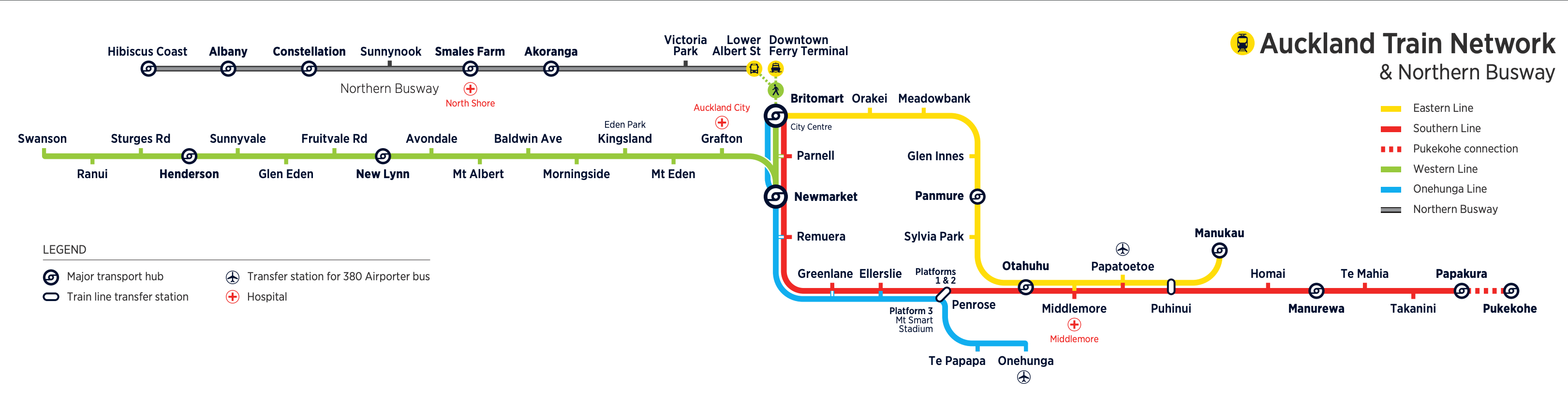
Recently, the Government announced their intention to introduce transport concessions . It is estimated that 900,000 people will receive this benefit. Auckland’s transportation is centred at the City Business District (CBD) (see Figure 1 and Figure 2 below). The current City Link Project in which the Government invested a huge among of money is, in my opinion not necessary or of priority. It is also not person-centric, but a decision that was made based on cost-effectiveness.

My experience of using public transportation has not been a pleasant one. For examples, I have to walk long distance to and from bus stops or train stations; there is a long waiting time, especially when the weather is not good. Sometimes, the services are cancelled during peak hours and replacement buses, which were always full, skipped my stop. There is still severe traffic at the CBD after several upgrade projects have been completed.

Auckland is the third most expensive city in the world with regards to public transportation (). The transportation system is not well-developed and errors happen regularly. Low-income households are thus unable to afford public transport. Older people may be more reliant on public transport due to their reduced ability to drive. However, the inconvenient public transportation system is a barrier to their mobility and has a negative impact on opportunities for them to remain socially connected to their community. The Minister of Associate Transport:

“It can be a barrier to accessing everyday activities, making it to a doctor’s appointment, making it to a job interview, going to see friends and family across town.” (Julie Anne Genter, the Associate Transport Minister)

Figure 1. Auckland Transport, (2018), Central Auckland route map.

Figure 2. Auckland Transport, (2019), Auckland train network map.

I think the development of public transport in Auckland has had a disproportionate focus on CBD but not the suburbs. People who are low-income or who are community cardholders mostly live in the suburbs and not the CBD (see figure 3). They may not be able to afford private vehicles or public transportation fees. It is even more expensive for these transport users as communities who live further away from the CBD are charged more. However, they are not able to afford rental in the CBD as there are lower rental fees in the suburbs (Maré, Coleman, & Pinkerton, 2011). Naturally, low-income households live away from the CBD, where it is affordable and of low-price.

Figure 3. Show the low-income households intend to live away from the CBD (Maré, Coleman, & Pinkerton, 2011).

Recommendations:

I would recommend the Government and Auckland Transport to develop the transport network beyond the CBD such that Auckland residents are more confident about the convenience of using public transport. More train stations and bus stops should be built between residential areas and bus and train routes should extend to areas in which there is a concentration of community services. We could even consider establishing a train service between the North Shore and Auckland City to reduce the vehicles on the Harbour Bridge.

References

Auckland Transport. (2018). Central Auckland route map. Retrieved from https://at.govt.nz/projects-roadworks/new-public-transport-network/new-network-for-the-central-suburbs

Auckland Transport. (2019) Auckland train network map. Retrieved from https://at.govt.nz/bus-train-ferry/train-services/auckland-train-network

Maré, D. C., Coleman, A., & Pinkerton, R. (2011). Patterns of population location in Auckland. Wellington, New Zealand: Motu Economic and Public Policy Research c2011.

Representation of Māori through media

By Brooke Royal

Māori to me is whānau; iwi, my land, my ancestors and my blood connections. Māori to others are unemployed gang members who have a drug and alcohol problem, who live off the benefit and beat their Mrs. because she didn’t make him eggs. When I think of Māori, I think of my loving whānau who work their butts off and live good lives, but the next person may look at my whānau and think of them as nothing but a suspect off Police Ten 7, as the suspect was of Māori descent.

Most people living in Aotearoa will enjoy their Thursday evenings watching Police Ten 7 and laughing with disgrace. Yet, have we noticed that they are describing most suspects as of Māori descent? Is it because of their darker complexion, particular tattoos, bigger build or that they were wearing a hoodie that makes them Māori? If this hasn’t sparked a light bulb in your head, how about Jake the Muss from Once Were Warriors? I personally believe that this is an awesome movie however the picture it paints in the minds of non-Māori is the wrong way Māori need to be represented. Police Ten 7 and Once Were Warriors are extremely popular across Aotearoa, but they are representing Māori as nothing but criminals, gang members, unemployed alcoholics who have multiple children and live in poverty. Another example of this discrimination toward Māori is through news articles. A recent article written by NZ Herald (2019) discussed how tobacco, alcohol and gambling tax is costing Māori over $1 billion a year. Throughout the article, they continued to compare Māori to European New Zealanders, and each time Māori were portrayed as the minority between the two.

“The Māori adult (15 years and over) population of 517,000 was less than one fifth of the European/Other population of 2.8m, but Māori tobacco consumption made up just under half (45%) of European/Other tobacco expenditure” (NZ Herald, 2019). Representations of Māori, and our stories, remain under the control of Pākehā-owned television, radio, and print media (Aoake, 2017). Discrimination toward Māori through the media continues to happen time and time again, that so many of us have become blind to the intolerance.

It has been 179 years since Te Tiriti o Waitangi was created and signed, and to this day Māori are still discriminated against. The Ministry of Health (2012) identified that Māori adults were almost twice as likely as non-Māori adults to have experienced any type of racial discrimination. Following this, Māori adults were almost three times as likely as non-Māori adults to have experienced any unfair treatment on the basis of ethnicity. Within the social work profession Māori are the most dominant ethnicity group we will work with, and as a Māori myself I know that there is a lot of whakamā that comes with seeking help or being told that you need help. This whakamā that Māori feel is the baggage we hold realising that we are a minority in our own country and on our own land. On the other hand, the whakamā Māori are living with will also be what prevents them reaching out for support when they are vulnerable. As social workers, we need to take into consideration how this ethnic group is treated and also portrayed within our communities and through our media, and how this may impact their overall wellbeing. For Māori, mainstream media is mired in colonial framing, misrepresentation and exclusion – yet mainstream media continues to insist its coverage is non-partisan (Aoake, 2017). []

The representation of Māori being portrayed through media is only contributing to the racial discrimination this ethnic group already receives. The whakamā Māori carry due to being marginalised in their own country will only worsen if media continue to drag them through the mud. My concerns with this is around the future for our Māori whanau, and the racial discrimination and whakamā our people are holding, potentially preventing them from reaching out for help when they are vulnerable.

Naku te rourou nau te rourou ka ora ai te iwi.

With your basket and my basket, the people will live.

Aoake, M. (2017, 14 August) Metiria Turei and how the NZ media ignores its own prejudice. Vice. Retrieved from https://www.vice.com/en_nz/article/ywwdpv/metiria-turei-and-how-the-nz-media-ignores-its-own-prejudice

Ministry of Health. (2012). Racial discrimination. Retrieved June 2, 2019, from  https://www.health.govt.nz/our-work/populations/maori-health/tatau-kahukura-maori-health-statistics/nga-awe-o-te-hauora-socioeconomic-determinants-health/racial-discrimination

Tobacco, alcohol and gambling tax costing māori over $1b a year (2019, May 13), New Zealand Herald, Retrieved from https://www.nzherald.co.nz/nz/news/article.cfm?c_id=1&objectid=12230415

The role of lived experience in social work practice

By Naomi Smith

            One of the reasons I wanted to become a social worker was to help others who may have had similar experiences as myself.  I have been able to access good therapists, and learn skills in self-reflection and I can quite honestly say, these have saved my life. The most helpful people were those who genuinely cared about my wellbeing and who shared their stories.  They didn’t launch into huge life stories, nor were they over-emotional (either of which would not be appropriate in that role) but it helped me to know I was not alone, and I could get through it.  It gave me hope.

            My experiences are just stories to me now; if they still brought up raw feelings I wouldn’t ever mention them, and to be honest I hardly ever do, but the understanding I have of human beings and our capabilities in the circumstances we can find ourselves in, have been my most valuable tool in working with people.  Sometimes just saying “I get it, I’ve been there” is enough. 

            Sharing lived experience is a highly personal choice, and you have no idea what can trigger people.  My utmost role is a duty of care to my client and I take this very seriously.  There are some good guidelines I found on self-disclosure in Social Work and these have been useful . 

            I have had two different experiences of the role of lived experience in social work. One was with a Maori run NGO and one was with a government agency.  The Maori NGO had core principles of Whakawhanaungatanga, Manaakitanga and Rangatiratanga.  Through the workshops and trainings, the staff were invited to disclose personal stories.  There were trainings on suicide prevention, drug and alcohol addictions, mental health, sexual abuse so you get the picture.  There was no judgement if you did or did not share, and confidentiality was emphasised.  It was part healing for some and served to work on our own potential triggers; it helped reduce shame and stigma and importantly, it built bonds between colleagues. 

It is seen in other organisations: Changing Minds only employs those in recovery from mental health or addiction issues, and the Jungian archetype of the Wounded Healer has been around for a while.  This is where supervision is so important within social work, and having an experienced supervisor that has had some therapeutic training will add to the quality of that journey.

On my second work placement at a government organisation, my supervisor asked me why I wanted to work for them.  I told them I shared some of the experiences of their clients (it was on my CV, this was no surprise) and I was met with “don’t share that with anyone in the office, and certainly not your clients”. What did they mean by this?  They talked about not wanting to trigger the clients, which I completely understand, and they were concerned that I would become a topic of gossip in the office.  This kind of culture compounds stigma and shame which are two things we should be striving to eliminate.   I found an article detailing white therapists experience of self-disclosure to Mexican-American clients.  The author found that this actually helped to break down barriers in the client/ therapist relationship.  You can read the article here and is also relevant when working with Tangata Whenua.

            Maybe we have become too risk adverse, and think if we share we have had suicidal thoughts that everyone is going to run around topping themselves.  Or that those struggling with addiction will relapse if you say you understand the cravings and they will pass.  Framing my response to a person in an emotional state has taken a lot of practice, mainly on my friends and family over the years where mistakes can be a little easier managed, (sometimes!). Sharing stories has taken away the isolation. Compassion, to me, is relating to the feelings: you don’t have to relate to the circumstances that brought those feelings to surface. Ruwhiu and Ruwhiu (2005) say that social workers need to be at peace with themselves before being able to have peace with the practice, something which I experience as true for me. 

In the spirit of social work in Aotearoa New Zealand, there is a lot to learn from whakawhanaungatanga.  As Ruby Wax said in a podcast with Russell Brand, both of whom have suffered from depression and anxiety, “We’re so alone, and no one is comparing notes.”  I believe it is possible in the right circumstances, that my lived experience can help others to see we are all human and there is hope. 

References

Brand, R (2017). Madness and Meditation. Under The Skin with Russell Brand and Ruby Wax. Retrieved from https://www.youtube.com/watch?v=2uhpc_FsMAM

Danzer, G., (2017). White Therapist Self-Disclosure in Multicultural Contexts. Society for Psychotherapy. Retrieved from: https://societyforpsychotherapy.org/white-therapist-self-disclosure-multicultural-contexts/

Dunne, C (2013) Carl Jung: Wounded Healer of the Soul. Retrieved from: https://www.youtube.com/watch?v=oZTG-tCEFv4

Ruwhiu, P. T., & Ruwhiu, L. A. (2005). Ko te pae o te atua mai i nga whakaaro hohonu nei, hei oranga mo te ira tangata. Te Komako 17(2), 4-19. Retrieved from https://anzswjournal.nz/anzsw/article/view/330/387

Vaz, G. Boundaries of Self Disclosure. Ethical Social Work Practice. Retrieved from: https://ethicalsocialwork.wixsite.com/ethicalsocialwork/boundaries-of-self-disclosure

‘Are we there yet? Becoming a harmonious multicultural society’

By ssungeunee

“One of New Zealand’s darkest days” (Ardern, 2019), in the aftermath of the Christchurch terror attack on 15 March 2019, we gathered as one to express our respect, anger, aroha, and solidarity towards our Muslim community. Also, we engaged with a thought that the acts of racism and hatred and devastating terror were done by a white supremacist individual.

Now, we are looking at nearly three months toward this massacre, victims and their families are enduring through hard times and recovering their physical, emotional, and cultural injuries. The government has shown its move to provide support for the victims such as assigning individual case managers, giving residency visas to the victims and their families, and changing in gun laws. Also, setting up an Royal Commission of Inquiry to investigate the specific circumstances that lead to the attack. The public has shown empathy towards shooting victims and the wider Muslim community by using their social media network and donating towards any supports they need. However, not everyone got it right; some of them were displaying ‘fake sympathy’ to commercialise their personal promotion in their social media and there were endless political and racial comments about the victims. Do our prejudices and racial stereotypes ignore to acknowledge the severity of impacts on those people?

Moreover, we can question ourselves that there are further issues that surround the person to commit such a horrific act towards vulnerable people who were just in the ordinary times of their lives. This act cannot come out by overnight; it was the result of the deep-seated Islamophobia, hatred of immigrants, the politics of economic and racial fears that our society is exposed from the populist politics and media influences (Hyslop, 2019). In the mass media’s construction of immigrants they are often represented as an exotic or threatening another group, which produces racist imagery that transforms into negative stereotypes, prejudices, and discourses that frame them into a homogenous group (Spoonley & Butcher, 2009). We desire to separate, establish borders between who we deem different and alarm us to be away from the groups which we label to be a danger for us (Stanley, 2019). As a society, we must reflect on the structural and societal underpinnings of this terror and address how unconscious racism arises into our society to neglect the shared humanity (Hyslop, 2019; Stanley, 2019).

Aotearoa New Zealand is becoming one of the diverse countries in the world. Currently, the net migration rates are estimated at 56,100 (Statistics New Zealand, 2019). More and different people are coming in and settling in this country, and people in New Zealand may feel uncomfortable being bombarded with different ethnicities. They may feel their workplace and economy are threatened by the intruder. But, this cannot be the reason for an extraordinary act of terror. As an immigrant, living in New Zealand for almost twenty years holding New Zealand passport, I cannot say that Aotearoa was always a welcoming country for me. I am no stranger to racist comments, gestures, and looks which, I have encountered over the last twenty years from primary age till now. This is one of the reasons why I choose to study social work; I acknowledge where there is a difference, there is a potential oppression for a particular group to be different such it is not specifically oppressed on immigrants, moreover, there are discrimination in age, disability, sexuality, religion, gender, and race. So, what can we do?

In moving forward, the question we must ask ourselves now is what we can do differently to ensure this unprecedented act does not repeat itself. We need to be aware that the actions of this terror and unconscious racism are strongly connected. Our roles are pivotal to engage different ethnic groups together becoming a harmonious multicultural society. Whether you are Maori, Pakeha, Asian or Middle Eastern we are no different; we may perceive different values, beliefs, and protocols, however, we cannot judge each person as what construction of social world defines to be. The basis of the global definition of the social work profession emphasises on the promotion of human rights, social cohesion, collective responsibility, and respect for diversities (IFSW, 2014). We, as social workers, need to be prepared to incorporate multicultural practice, which we are aware of balancing the cultural differences but also knowing the sociopolitical dimensions that are affecting the person.  

Kia kaha

References

Ardern, J. (2019, March 15). Statement from Jacinda Ardern on Christchurch         shootings. Retrieved from https://www.beehive.govt.nz/release/statement-  jacinda-ardern-christchurch-shootings

Hyslop, I. (2019, March 20). Aftermath [Blog post]. Retrieved from http://             http://www.reimaginingsocialwork.nz/2019/03/aftermath/

International Federation of Social Workers. (2014, August 6). Global Definition of    Social Work– International Federation of Social Workers. Retrieved from    https://www.ifsw.org/global-definition-of-social-work/

Parliamentary Counsel Office. (2019, April 8). Royal Commission of Inquiry into the          Attack on Christchurch Mosques on 15 March 2019 Order 2019 (LI 2019/72)   Contents – New Zealand Legislation. Retrieved from             http://www.legislation.govt.nz/regulation/public/2019/0072/12.0/LMS183988.h        tml

Salter, C. (2019, March 22). Social responsibility: Facebook in the aftermath of the             Christchurch mosque terror attack. Retrieved from       https://stoppress.co.nz/features/social-responsibility-facebook-in-the        aftermath-of-the-christchurch-mosque-terror-attack

Spoonley, P., & Butcher, A. (2009). Reporting superdiversity. The mass media and   immigration in New Zealand. Journal of Intercultural Studies30(4), 355-372.       Retrieved from http://dx.doi.org/10.1080/07256860903213638

Stanley, E. (2019, March 21). How expressions of white supremacy seep through our      society [Opinion]. Retrieved from http:// https://thespinoff.co.nz/society/21-03-2019/how-expressions-of-white-supremacy-seep-through-our-society/

Statistics New Zealand. (2019, May 14). Net migration provisionally at 56,100.      Retrieved from https://www.stats.govt.nz/news/net-migration-provisionally-at- 56100

Design a site like this with WordPress.com
Get started