The gap getting bigger between the rich and the poor

By Nia Mafi

           The country once known as the ‘land of milk and honey’ throughout the years has been anything but that. I have been one of the families whose has been a victim of the reality of poverty. As a child of a single parent in South Auckland I can attest to effects of poverty and my access to opportunities. I have witnessed and experienced food insecurities as a child as well being unable to access to educational opportunities. I have witnessed my mother struggling on the basic benefit to provide the staples for us her children. My mum struggled to meet our needs, and this affected her mental health as well as compromised my relationship with her. 

However, in my research I have found that the sad truth is child poverty has increased tremendously within New Zealand affecting over 300,000 of our children and to understand this a bit better 45,000 more than a year ago (Guardian , 2019). To put this into perspective, the families and children who are most affected by poverty are identified as Maori and Pacific families. It is stated that there are many living below the 60% income poverty line. As a country, we need to address the issue of child poverty and support initiatives that alleviate the impact that the national and international policies have created over many generations. Many of these have become entrenched in our society which has an underlying colonialist values and beliefs and been supported with the concepts associated of neo-liberalist ideologies since 1980’s.

The statistics as provided by Counties Manukau District Health Board prove that the children and families who are as living in income poverty are at most risk of medical problems and mental health illnesses. The other issues for those affected by poverty are social exclusion and lower educational achievements which end up creating statistics that reflect this with the Ministry of Education. They live in unstable, poor-quality housing with the effect on the overall well-being of the family.

Food insecurity is caused by the lack of access to quality or quantity of nutritious food and the list goes on. All the effects of the child poverty have the capcity to widen the gap between the have and have nots. Speaking on this issue I come from a place of experience from my life; this has been my reality. Being raised in a one-parent home being the eldest alongside three other siblings residing in South Auckland, poverty was not an issue as poverty was our normal. Our normal was reflected throughout my neighbourhood, I could vividly recall times that dinner was two-minute noodles and white bread for 99c or five dollars-worth of hot chips from the nearest takeaways because it would feed us all. I was unaware that this was not the way everyone else lived until I got older and more socially diverse.

During my time as a 4th Year Social Work student I have become more aware of the inequities in our society and the large gap between the very wealthy and the very poor. In my studies I have also discovered that this has been progressively happening over several generations as a direct result of policies and systems that have not supported growth for those that are most affected by poverty. In my opinion, after reading the Welfare Expert Advisory Group (WEAG) 205-page report and the 42 recommendations that were made, it is the time for action against child poverty for the future of New Zealand as a whole. It does need to be noted that the WEAG recommendations to date have been ignored and are yet to be a part of the action plan and strategy for this government.

Personally, I believe the policies and systems currently in place need to be adjusted to not only address child poverty but to actively engage with organisations and communities that are attempting to address the most obvious symptoms of poverty with the increase of homeless people and begging being everywhere. Overall though the effects of poverty can only be addressed when we a country work alongside each other and with the financial support of our government to help empower and facilitate change systemically.

Reference list:

https://www.health.govt.nz/new-zealand-health-system/my-dhb/counties-manukau-dhb/population-counties-manukau-dhb

https://www.theguardian.com/world/2016/aug/16/new-zealands-most-shameful-secret-we-have-normalised-child-poverty

http://www.weag.govt.nz/assets/documents/WEAG-report/aed960c3ce/WEAG-Report.pdf

Child poverty, deprivation and its unseen effect on our community

By Te Rangianiwaniwa Herewini

As a social work student, I have become passionate about the reality of poverty and deprivation within my local community. As a single mother of three and grandmother of one I have experienced the effects of poverty personally. I have seen people with no food or warm clothing begging for change at local supermarkets. I travel around at night and see homeless people snuggled in doorways, outside shops wrapped in blankets.

Statistics released by the advocacy group Child Poverty Action Group (CPAG) show us the consistent increase in income poverty in New Zealand “There has been an increase in child poverty: In 1982, 14% of children lived in poverty. In 2016, 28% of children live in poverty

Many more symptoms of poverty such as hunger, lack of hope, illness, stress and unstable housing can be seen in my community. Families are struggling to maintain a basic standard of living. Our society has the underlying colonial beliefs engrained in it to judge people by colour, nationality, ethnicity, geographical location and material wealth. This creates stereotypes that cause undue stress on these families who are doing the best they can. All these parents would like to provide the best for their child, but poverty limits many choices.

New Zealand has previously not had an official poverty line (nzccss.org.nz). However, the Child Poverty Reduction legislation is heading towards creating this and I would like to acknowledge this as progress. However, how do we not have a poverty line in New Zealand?

I seek an understanding of why our government does not aim at community solutions to this national social issue. Although I do have to acknowledge that inadequate incomes, a failing school system and homelessness are a direct result of a combination of both national and international policies that have continued to support the neo-liberal status quo causing continued income poverty and hardship. I do not expect our communities to solve these issues. However, I know my community has the ability to address some of these issues directly as we are able develop a rapport with those that are most at risk because they are our community.

Our government has made a vested financial commitment to the development of building affordable homes. It has also engaged with reviewing the social welfare system. This was previously done in 1972 (Royal Commission of Inquiry into Social Welfare) and again in 1986 (Social Policy Review). A Welfare Expert Advisory Group (WEAG) was employed by our government in 2018 to review and recommend changes in our welfare system. The product being a 205-page report and 42 recommendations. However, to date the efforts of the WEAG have largely been ignored.

 In the Manurewa community there are several initiatives that show a sense of human kindness. A woman in Clendon, Manurewa, makes sandwiches and distributes these to the local homeless and when she requested support via Facebook contributions were overwhelming and volunteers arrived to help. Another group chose to distribute hot meals to the homeless one night a week throughout winter and this was once again supported by locals. Schools have participated in the Breakfast in schools, Milk for schools, and the Lunches in schools supported by KidsCan, Fonterra and Auckland City Council. These initiatives show resilience and awareness by this community of the effects of poverty and a sustainable manner of addressing the needs. These schools have shown that they are active members in their community. These individuals have become active members of our community. They have reacted and addressed issues associated to poverty. It also illustrates that people want to be actively engaged in addressing poverty so let’s empower them, let’s support them, let’s ask them. Communities know their people and their environments. ‘Come on’ Jacinda, help us help our own – empowerment through engagement! Let’s work towards a collective strategy to the issue of poverty. Creating a collaborative plan for all creates community ownership and works towards a society that can speak to their needs and build capacity.

Where did it go wrong? identifying child maltreatment and neglect

By K

New Zealand once a country, which took pride in being a great place to be a child is now ranked third highest among rich nations for its international child maltreatment death rates being four to six times higher than countries with low incidences of child maltreatment deaths (UNICEF, 2003).  On average, one child is killed every five weeks, and around 41,000 Reports of Concern are made to Oranga Tamariki, the statutory child protection agency for further assessment and investigation each year (Child Matters, 2018) . With rising numbers, I cannot ignore and ask, where did it go wrong? Child neglect and abuse is the result of a range of interacting factors. Therefore, it is complex to pinpoint one cause. A vast body of research and evidence present the correlation between poverty and inequality contributing to the increased risk of child maltreatment and neglect.

The correlation between poverty and child maltreatment is no longer a state secret; however, there appears to lack of policy intervention and practice assessment against this matter. It remains as a powerful blaming game against poor parenting for the reproduction of disadvantage and dysfunction. The government continues to view child abuse and neglect as an internal family issue and attempts to address it through social services and risk management policies, instead of tackling the risk of child maltreatment as a result of how our economic system is structured and how wealth is distributed. A rich vein of irony lies within New Zealand being rich, as a country but poor, as a nation with rates of child poverty, worst among the OECD countries. 

I can relate my childhood to the impact of poverty growing up in New Zealand. When my family first immigrated, trying to settle in a new environment and lifestyle was difficult, we ended up being too poor to live in a warm, adequate housing with barely enough money to spend on food and electricity. When I retrieve one of the very few childhood memories, I remember going to school hungry, being sick often and flashbacks of my parents arguing regularly. I recall my teacher being concerned about my learning and behaviour as I was easily distracted and unable to concentrate even for a short period. My parents both worked full-time, their priority was, unfortunately, not childcare but survival to pay weekly rent and bills. Their inability to adequately parent was the result of the inequality in society — the effort to survive, not their incapability to parent.

When we suggest the need to reduce inequality, many hear alarm bells and dive into the idea of increasing economic growth and market value, instead of redistributing the current resources we already have. By reviewing and reconsidering the annual budget to reduce spending wherever necessary and increase income, benefits and reduce the cost of housing are practical terms where we can commerce. Poverty in New Zealand is measured before and after housing costs. This unique measurement suggests the amount of impact it has on the overall household income. Implemented in the Child Poverty Action Plan report (2011), suggest reducing housing costs to the international standard of 30 percent, would decrease the rate of poverty by 70 percent. The cost of housing is huge. These adjustments can potentially change the quality of living for many families.

For those who fear that such policies will be costly and unaffordable, reducing inequality and poverty will produce more efficient benefits for the country. The government is currently spending billions on health care and social services. Approximately $2 billion are spent on child abuse and neglect related incidents due to immediate and long-term health cost, child welfare, crime, and lost productivity. It is costly, not only to the family directly exposed to poverty but also to society. However, if we reduce the gap and increase human productivity by supporting individuals to achieve their full potential, we can gain the $10 billion in contribution, which is the calculated cost of lost opportunity alone.

Reducing child poverty and inequality must be an integral part of government action to reduce child abuse and neglect. There is an increasing demand for social work practitioners in the field of child protection. However, there is lack of support for social work practitioners that enable them to handle large caseloads in terms of time and resources within social services. Resources should be better distributed within policy and budget that enable social services to provide support for individuals and families but also new initiatives that bring together schools and health care services to be vigilant about children’s safety. If we choose to make better choices about how our resources are distributed and working together in all fields of practice relating to children’s safety, we have a greater chance to become rich as a country, as citizens, taking back the pride in being the best country to be a kid. 

References

Child Matter. (2018). Facts about child abuse. Retrieved from http://www.childmatters.org.nz/55/learn-about-child-abuse/facts

UNICEF. (2003). Child maltreatment deaths in rich nations. Florence: retrieved from https://www.unicef-irc.org/publications/pdf/repcard5e.pdf

 Dale, M. C., O’Brien, M., & St John, S. (2011). Left further behind: how policies fail the poorest children in New Zealand [ISBN 0-9582263-9-3]. Auckland, New Zealand. Retrieved from https://www.cpag.org.nz/assets/sm/upload/jq/66/v2/dv/WEB%20VERSION%20OF%20LFB.pdf

Lack of transportation development in Auckland

By Kiky Eng

In this blog, I am going to discuss the Auckland public transportation system from a social worker perspective. One of the responsibilities of social workers is to support clients to live independently in the community. Many social services provide “transportation support” to clients, such as by taking them grocery shopping; to the doctor’s appointment; or to attend community activities as public transportation fees are unaffordable and inconvenient for clients who may have physical and mental health issues and disabilities.

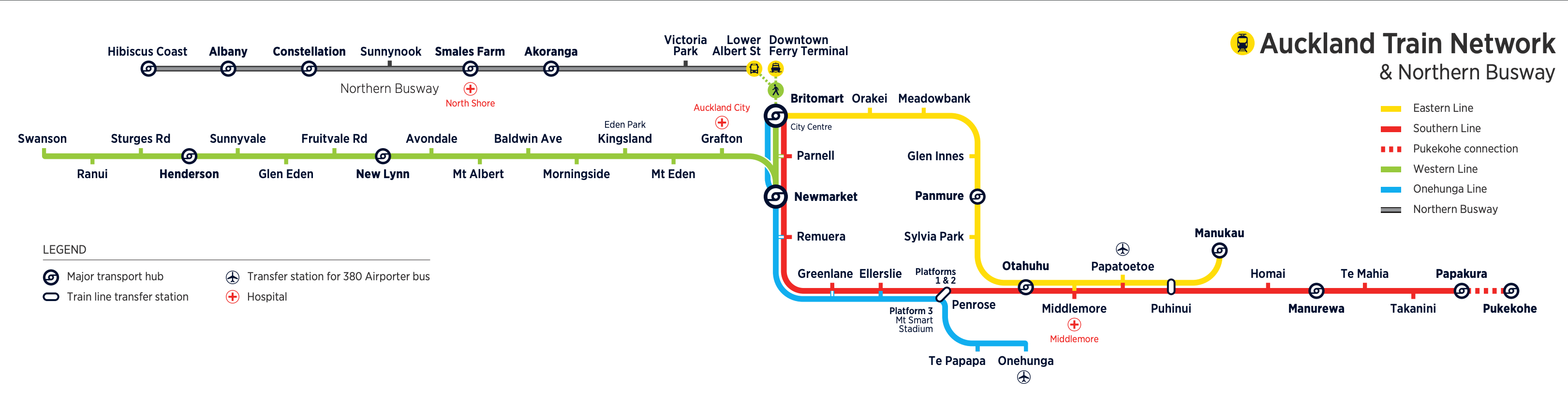
Recently, the Government announced their intention to introduce transport concessions . It is estimated that 900,000 people will receive this benefit. Auckland’s transportation is centred at the City Business District (CBD) (see Figure 1 and Figure 2 below). The current City Link Project in which the Government invested a huge among of money is, in my opinion not necessary or of priority. It is also not person-centric, but a decision that was made based on cost-effectiveness.

My experience of using public transportation has not been a pleasant one. For examples, I have to walk long distance to and from bus stops or train stations; there is a long waiting time, especially when the weather is not good. Sometimes, the services are cancelled during peak hours and replacement buses, which were always full, skipped my stop. There is still severe traffic at the CBD after several upgrade projects have been completed.

Auckland is the third most expensive city in the world with regards to public transportation (). The transportation system is not well-developed and errors happen regularly. Low-income households are thus unable to afford public transport. Older people may be more reliant on public transport due to their reduced ability to drive. However, the inconvenient public transportation system is a barrier to their mobility and has a negative impact on opportunities for them to remain socially connected to their community. The Minister of Associate Transport:

“It can be a barrier to accessing everyday activities, making it to a doctor’s appointment, making it to a job interview, going to see friends and family across town.” (Julie Anne Genter, the Associate Transport Minister)

Figure 1. Auckland Transport, (2018), Central Auckland route map.

Figure 2. Auckland Transport, (2019), Auckland train network map.

I think the development of public transport in Auckland has had a disproportionate focus on CBD but not the suburbs. People who are low-income or who are community cardholders mostly live in the suburbs and not the CBD (see figure 3). They may not be able to afford private vehicles or public transportation fees. It is even more expensive for these transport users as communities who live further away from the CBD are charged more. However, they are not able to afford rental in the CBD as there are lower rental fees in the suburbs (Maré, Coleman, & Pinkerton, 2011). Naturally, low-income households live away from the CBD, where it is affordable and of low-price.

Figure 3. Show the low-income households intend to live away from the CBD (Maré, Coleman, & Pinkerton, 2011).

Recommendations:

I would recommend the Government and Auckland Transport to develop the transport network beyond the CBD such that Auckland residents are more confident about the convenience of using public transport. More train stations and bus stops should be built between residential areas and bus and train routes should extend to areas in which there is a concentration of community services. We could even consider establishing a train service between the North Shore and Auckland City to reduce the vehicles on the Harbour Bridge.

References

Auckland Transport. (2018). Central Auckland route map. Retrieved from https://at.govt.nz/projects-roadworks/new-public-transport-network/new-network-for-the-central-suburbs

Auckland Transport. (2019) Auckland train network map. Retrieved from https://at.govt.nz/bus-train-ferry/train-services/auckland-train-network

Maré, D. C., Coleman, A., & Pinkerton, R. (2011). Patterns of population location in Auckland. Wellington, New Zealand: Motu Economic and Public Policy Research c2011.

Design a site like this with WordPress.com
Get started