By Kiky Eng
In this blog, I am going to discuss the Auckland public transportation system from a social worker perspective. One of the responsibilities of social workers is to support clients to live independently in the community. Many social services provide “transportation support” to clients, such as by taking them grocery shopping; to the doctor’s appointment; or to attend community activities as public transportation fees are unaffordable and inconvenient for clients who may have physical and mental health issues and disabilities.
Recently, the Government announced their intention to introduce transport concessions . It is estimated that 900,000 people will receive this benefit. Auckland’s transportation is centred at the City Business District (CBD) (see Figure 1 and Figure 2 below). The current City Link Project in which the Government invested a huge among of money is, in my opinion not necessary or of priority. It is also not person-centric, but a decision that was made based on cost-effectiveness.
My experience of using public transportation has not been a pleasant one. For examples, I have to walk long distance to and from bus stops or train stations; there is a long waiting time, especially when the weather is not good. Sometimes, the services are cancelled during peak hours and replacement buses, which were always full, skipped my stop. There is still severe traffic at the CBD after several upgrade projects have been completed.
Auckland is the third most expensive city in the world with regards to public transportation (). The transportation system is not well-developed and errors happen regularly. Low-income households are thus unable to afford public transport. Older people may be more reliant on public transport due to their reduced ability to drive. However, the inconvenient public transportation system is a barrier to their mobility and has a negative impact on opportunities for them to remain socially connected to their community. The Minister of Associate Transport:
“It can be a barrier to accessing everyday activities, making it to a doctor’s appointment, making it to a job interview, going to see friends and family across town.” (Julie Anne Genter, the Associate Transport Minister)

Figure 1. Auckland Transport, (2018), Central Auckland route map.
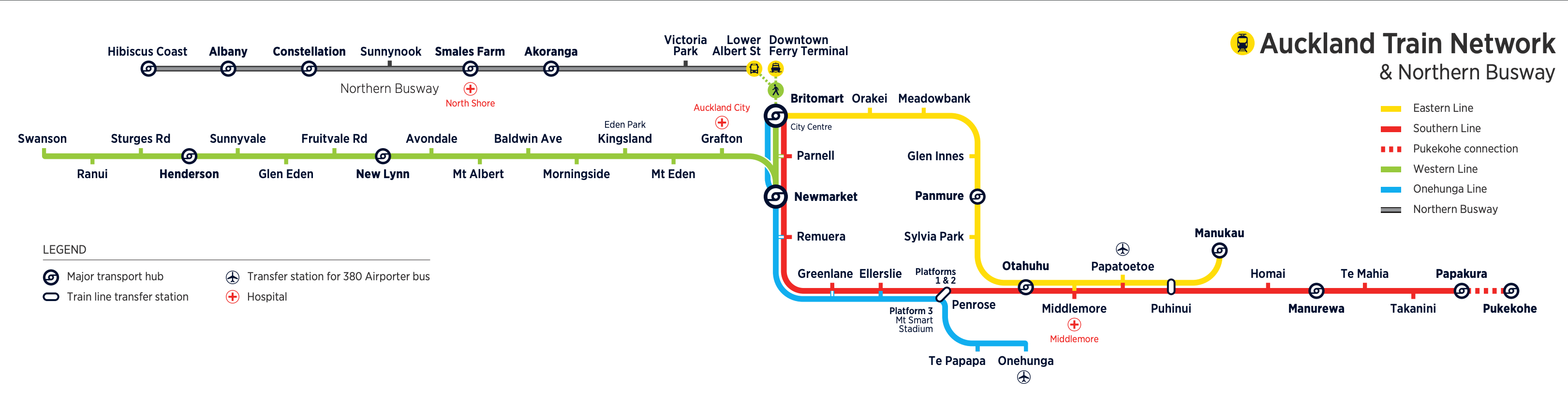
Figure 2. Auckland Transport, (2019), Auckland train network map.
I think the development of public transport in Auckland has had a disproportionate focus on CBD but not the suburbs. People who are low-income or who are community cardholders mostly live in the suburbs and not the CBD (see figure 3). They may not be able to afford private vehicles or public transportation fees. It is even more expensive for these transport users as communities who live further away from the CBD are charged more. However, they are not able to afford rental in the CBD as there are lower rental fees in the suburbs (Maré, Coleman, & Pinkerton, 2011). Naturally, low-income households live away from the CBD, where it is affordable and of low-price.

Figure 3. Show the low-income households intend to live away from the CBD (Maré, Coleman, & Pinkerton, 2011).
Recommendations:
I would recommend the
Government and Auckland Transport to develop the transport network beyond the
CBD such that Auckland residents are more confident about the convenience of
using public transport. More train stations and bus stops should be built between
residential areas and bus and train routes should extend to areas in which
there is a concentration of community services. We could even consider
establishing a train service between the North Shore and Auckland City to
reduce the vehicles on the Harbour Bridge.
References
Auckland Transport. (2018). Central Auckland route map. Retrieved from https://at.govt.nz/projects-roadworks/new-public-transport-network/new-network-for-the-central-suburbs
Auckland Transport. (2019) Auckland train network map. Retrieved from https://at.govt.nz/bus-train-ferry/train-services/auckland-train-network
Maré, D. C., Coleman, A., & Pinkerton, R. (2011). Patterns of population location in Auckland. Wellington, New Zealand: Motu Economic and Public Policy Research c2011.
 2019 Social work blog 413 /713